
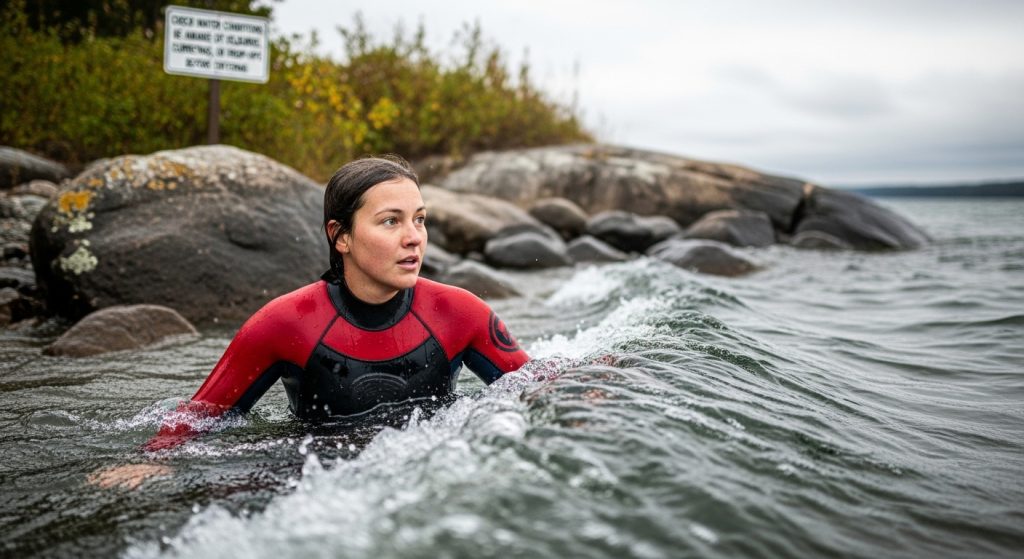
Check Water Conditions
Be aware of cold temperatures, currents, or drop-offs before entering.
Every body of water looks calm from the surface — the gentle waves, the clear reflections, the peaceful sound of splashing.
But underneath, things can be very different.
That’s why it’s important to always check the water conditions before you enter.
Why Water Conditions Matter
What you can’t see can hurt you.
Water can change from safe to dangerous in seconds, especially in lakes, rivers, or the ocean.
Cold temperatures, strong currents, or sudden drop-offs can catch swimmers off guard, no matter their skill level.
A quick check before you dive in can prevent serious accidents.
Cold Temperatures
Even in warm weather, water can be much colder than you think.
Cold water can shock your body, making it hard to breathe or move your muscles.
This is called cold-water shock, and it’s one of the biggest causes of drowning in open water.
If the water feels very cold, enter slowly, stay close to shore, and wear a wetsuit or lifejacket if needed.
Currents and Waves
Currents can be invisible but powerful.
They can pull you away from shore faster than you can swim back.
Before swimming, look for warning flags, posted signs, or ask a lifeguard about conditions.
If you feel a current pulling you, don’t fight it directly — swim parallel to the shore until you’re free, then head back safely.
Drop-offs and Depth Changes
Some lakes and rivers have sudden drop-offs — one step can take you from knee-deep to over your head.
Always walk in slowly to test the depth.
Avoid diving into unknown waters, especially if you can’t see the bottom.
Simple Safety Tips
* Check weather and water reports before heading out.
* Observe the water — look for movement, waves, or debris.
* Avoid swimming after heavy rain, which can hide strong currents.
* Ask locals or lifeguards about hidden hazards.
* Always swim with a friend or in lifeguarded areas.
The Bottom Line
Water is beautiful — but it’s also powerful and unpredictable.
Taking a minute to check the water conditions can save your life or someone else’s.
Before you dive, float, or wade in, remember:
Be aware of cold temperatures, currents, or drop-offs before entering.
Because the safest swimmer is the one who’s prepared.